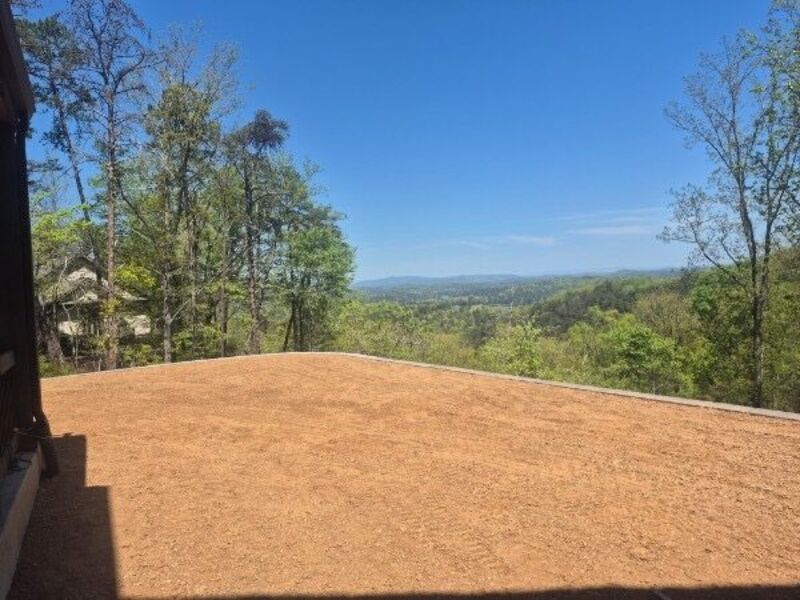
A retaining wall problem is rarely just a problem with the face of the wall. On a sloped Bremen property, the more important questions are where water comes from, where it can leave, what the wall is supporting, and whether the ground below the first course is stable.
County-wide soil maps are useful for planning, but they cannot replace looking at your exact lot. The USDA Web Soil Survey notes that on-site investigation may be needed for engineering uses. That matters because soil, fill, buried debris, and runoff can change within one property.
Start With the Water Path
Walk the area during or just after rain. Look for roof downspouts, driveway runoff, low spots, bare channels, sediment piles, and water emerging from the slope. A new wall should not simply hide these clues. Its drainage system needs a dependable outlet, and surface water should be directed away from the backfill whenever possible.
- Water crossing the top: can erode backfill and stain or displace the wall face.
- Water trapped behind the wall: adds pressure the wall was not meant to carry.
- Water cutting around an end: can undermine the base or create a new washout.
- Downspouts aimed toward the slope: may need to be rerouted as part of the project.
Check the Base Before Choosing Materials
Block, boulder, and natural-stone walls all depend on a properly prepared base. Soft fill, roots, or disturbed soil below the wall can lead to settlement even when the visible material is strong. The correct excavation depth and reinforcement cannot be decided from wall height alone.
Repair, Rebuild, or Regrade?
A small drainage correction may help a wall that is still structurally sound. A wall with significant rotation, failed base material, broken connections, or continuing soil loss may need to be rebuilt. In some yards, terracing or regrading can reduce the height and pressure on a single wall.
Use our repair-or-replace guide to review the warning signs, then see how retaining-wall drainage works. For local service details, visit our Bremen retaining wall page.
Before You Request a Quote
- Measure the approximate wall length and exposed height.
- Note what sits above the wall: yard, fence, driveway, pool, building, or another slope.
- Show access for equipment and material delivery.
- Photograph leaning, gaps, erosion, and water outlets.
- Check the Georgia permit guide, then confirm current local requirements for your property.
Bremen, GA Retaining Wall FAQs
What warning signs mean a Bremen retaining wall needs attention?
New leaning, widening gaps, cracked blocks, washed-out soil, standing water, or a drain outlet that has stopped flowing are reasons to schedule an inspection. A sudden change after heavy rain deserves prompt attention.
Does every Bremen wall need a drain pipe?
The drainage plan depends on the wall and site, but retaining walls commonly need free-draining stone and a safe outlet for collected water. Surface runoff also needs a route that does not spill over or behind the wall.
Is block or natural stone better for a sloped Bremen yard?
Both can work when the base, reinforcement, and drainage match the site. Segmental block offers predictable engineering options; natural stone or boulders can suit a wider, more natural slope. Access, height, appearance, and budget guide the choice.
Can you estimate a Bremen wall from photos?
Often we can give useful initial guidance from the rough length, height, access information, and 3–4 wide photos. A final quote may still require an on-site look when grades, utilities, property lines, or drainage outlets are unclear.
Will my Bremen retaining wall need a permit or engineer?
Requirements depend on wall height, loading, location, and the authority responsible for the property. Taller walls and walls supporting driveways or structures may need engineering. Confirm current requirements before construction.