Paver Patios & Hardscapes
Patios, pool decks, walkways, and driveways built on a properly compacted base — designed together with the retaining walls that make a sloped Georgia yard usable.
Paver Patios Built to Survive Georgia Clay
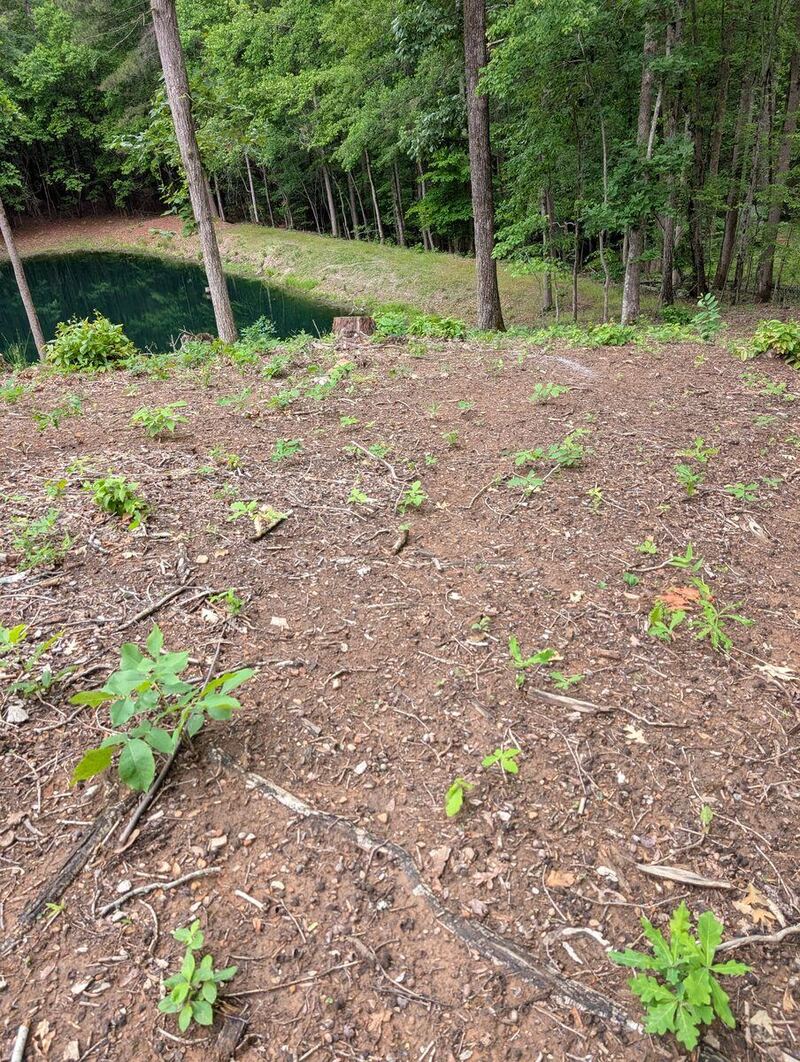
Most failed paver patios in our area were not failed by the pavers. They were failed by the base. Georgia red clay expands when it is wet and shrinks when it dries, and a patio laid on a thin base over unprepared clay will settle, dish, and pop its joints within a few seasons.
We excavate to undisturbed soil, install a compacted crushed-stone base sized for the use (deeper for driveways than for a walkway), screed a bedding layer, lay the field, cut the perimeter, lock in the edge restraint, and sweep in polymeric sand. It is a boring list. It is also the entire difference between a patio that is flat in ten years and one that is not.
Hardscapes We Install
- Paver patios — concrete paver, travertine, and natural stone patios in any shape your yard allows
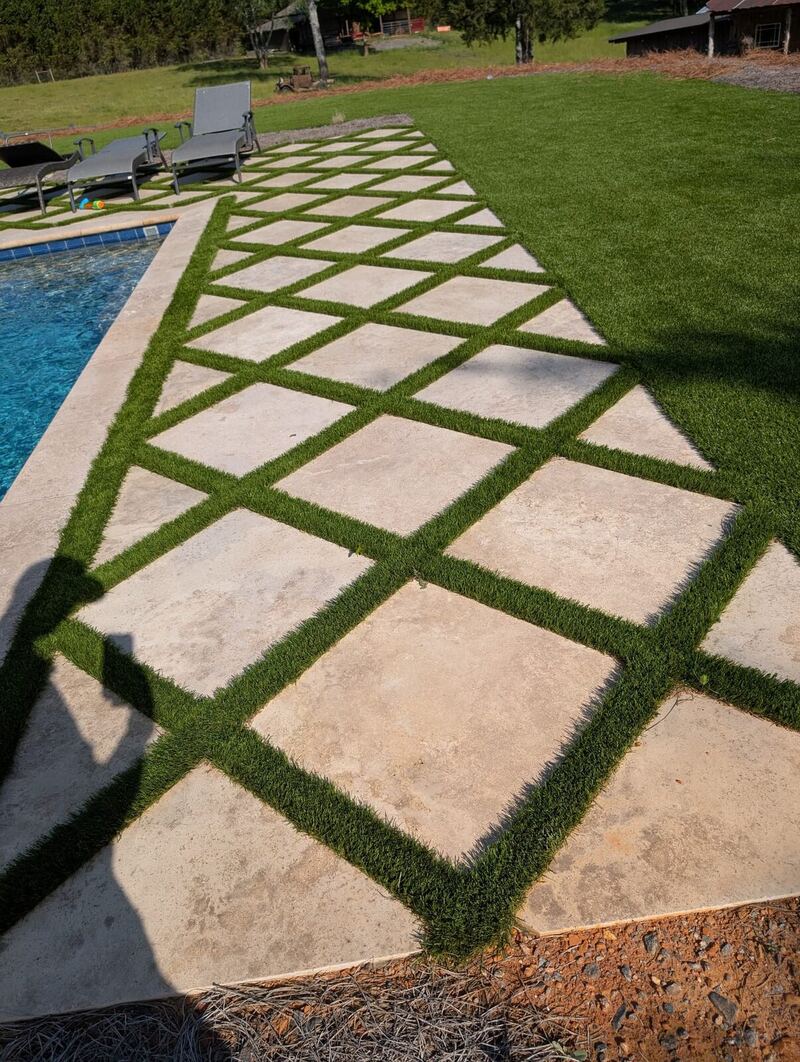
- Pool decks and coping — travertine and paver surrounds with cool, slip-resistant surfaces
- Walkways and garden paths — front walks, side yards, and connecting paths
- Paver driveways and aprons — heavier base sections built for vehicle loads
- Steps, stoops, and landings — paver and natural stone treads integrated into the grade
- Seat walls, columns, and fire pits — built from matching wall block or stone
- Turf and drainage integration — artificial turf panels and surface drains tied into the hardscape
Patios and Retaining Walls Belong Together
On a sloped Georgia lot, a patio is usually a retaining wall problem wearing a different hat. You cannot have a flat outdoor room on a hillside without holding back the grade somewhere. Because we build both, we design the wall and the patio as one system — one excavation, one drainage plan, one crew, and materials that actually match.
That matters most where the two meet: the wall behind a patio has to drain without pushing water under the pavers, and the patio has to slope away from the house without ponding at the wall face.
What a Paver Patio Costs in West Georgia
Paver patios and walkways here run roughly $14–$28 per square foot installed; paver driveways run roughly $18–$34 per square foot because of the heavier base. Paver selection, pattern complexity, cuts and curves, demolition of an existing slab, and access for equipment all move the number. Steps typically add $350–$900 each.
For a project-specific range including any wall work, use our hardscape cost estimator.
Our Process
- Free on-site design consult. We walk the yard, take measurements, and talk through layout, materials, and drainage.
- Written estimate. Clear scope, clear price, no pressure.
- Excavation and base. Dig to undisturbed soil, install and compact crushed stone in lifts.
- Laying and cutting. Bedding sand screeded, field laid to pattern, perimeter cut clean.
- Edge restraint and polymeric sand, then a final compaction pass.
- Grading and cleanup. Surrounding grade finished so water leaves the patio, site hauled clean.
Serving West Georgia
We install paver patios, pool decks, and hardscapes in Douglasville, Dallas, Hiram, Paulding County, and nearby communities. Browse finished work in the project gallery.
Frequently Asked Questions
How much does a paver patio cost in Georgia?
Paver patios and walkways in West Georgia run roughly $14 to $28 per square foot installed. Paver driveways run $18 to $34 per square foot because they need a deeper, heavier base. Steps typically add $350 to $900 each.
How long does a paver patio installation take?
A typical residential patio takes three to five working days. Larger projects, pool decks, or patios combined with retaining wall work take longer, and rain extends any schedule.
Will pavers sink or shift in Georgia clay?
Not if the base is right. Clay moves with moisture, so we excavate to undisturbed soil and install a compacted crushed-stone base thick enough for the intended use, then lock the field with edge restraint and polymeric sand.
Are pavers better than a poured concrete slab?
For most Georgia yards, yes. Pavers flex with ground movement instead of cracking, individual units can be lifted and reset, and they offer far more design range. A slab is usually cheaper up front.
Can you build a patio and a retaining wall at the same time?
That is most of what we do. On a sloped lot the wall and the patio are one system, so we plan the excavation, drainage, and materials together rather than building them as separate projects.
Do paver patios need a permit?
A ground-level patio usually does not. Once a retaining wall four feet or taller is involved, or the work affects drainage or setbacks, a permit may be required. We handle that when it applies.