Boulder & Stone Retaining Walls
Large-stone gravity walls and Georgia granite walls that hold a slope and look like they have always been there. Built on a compacted base with real drainage behind them.
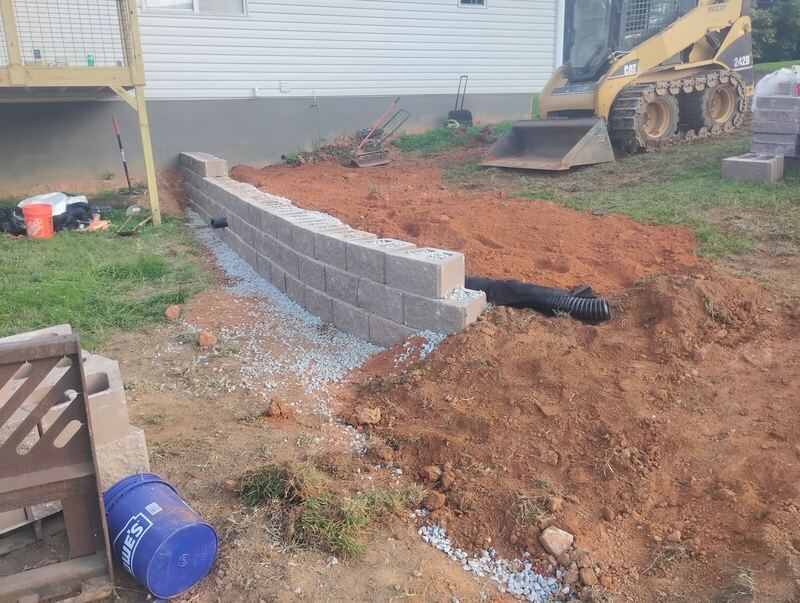
Boulder Walls Built for Georgia Hillsides
A boulder retaining wall uses large natural stones — typically one to four tons apiece — stacked and keyed into a compacted base to hold back a slope. Done right, it looks like it grew out of the hillside instead of being installed on it. Done wrong, it is an expensive rock pile that shifts after the first heavy Georgia rain.
The difference is in what you cannot see: the excavation depth, the compacted stone base, the batter (backward lean) of each course, how the stones are keyed into one another, and the drainage behind them. We place every boulder with an excavator and set it by hand-checking the bearing points before moving to the next.
Boulder vs. Block: Which Should You Choose?
- Look. Boulder and natural stone walls read as permanent and organic, and they suit wooded lots, creek banks, and rural properties. Block walls read as clean and architectural.
- Cost. Block runs roughly $28–$55 per square foot of wall face here; natural stone and boulder walls run roughly $45–$95, driven by stone sourcing and machine time.
- Height. Boulders handle low to moderate heights beautifully. Past about four feet, or with a driveway or pool above, engineering and reinforcement enter the picture regardless of material.
- Curves and terraces. Both work. Boulders excel at loose, natural curves and stepped terraces that follow existing grade.
- Maintenance. Neither needs much. Boulder walls have no caps to reset and no block faces to spall.
Our full comparison: block vs. stone retaining walls.
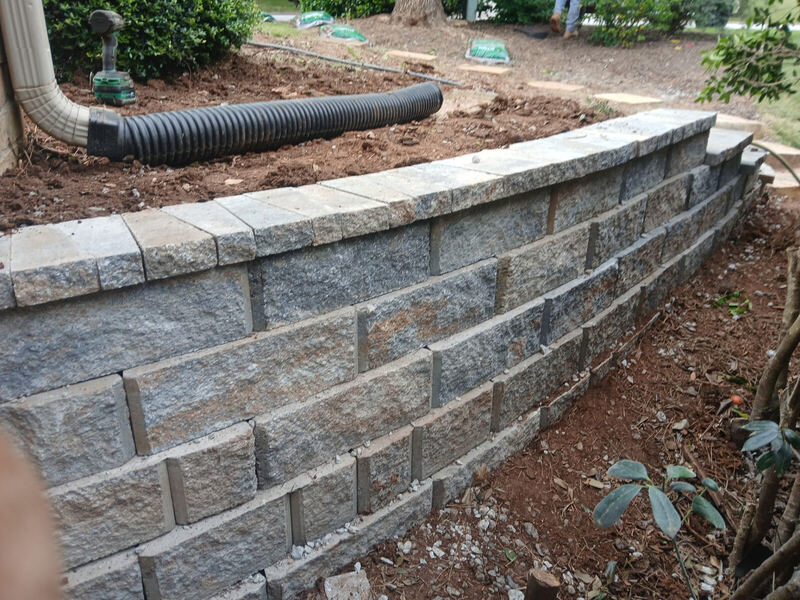
What We Build in Natural Stone
- Boulder retaining walls — large-stone gravity walls for slopes, creek banks, and driveway cuts
- Georgia granite and fieldstone walls — locally sourced stone with a tighter, more finished face
- Stacked stone seat walls and planters — low walls that define patios and garden beds
- Terraced boulder walls — two or three shorter walls stepped up a slope to create usable, plantable levels
- Boulder outcroppings and accents — partially buried stone groupings that break up long slopes
- Stone steps and landings — solid slab treads set into the wall line
How We Build a Boulder Wall
- Excavate to undisturbed soil and cut a level bench the full length of the wall.
- Place and compact a crushed-stone base deep enough to carry the bearing load of the largest stones.
- Set the base course using the largest, flattest boulders, partially buried so the wall is anchored below grade.
- Build with batter and keying. Each course leans back into the hill and bridges the joints below it.
- Backfill with drainage stone and filter fabric, with a perforated drain pipe daylighted to a safe outlet.
- Chink, grade, and finish. Smaller stone fills the voids, the slope above is regraded, and the site is cleaned up.
What a Boulder Wall Costs in West Georgia
Natural stone and boulder walls run roughly $45–$95 per square foot of wall face in our area. Where a project lands in that range depends on stone type and sourcing distance, wall height, site access for the excavator, and how much drainage and grading work comes with it. Run the numbers yourself in the cost estimator, then call for a firm written quote.
Serving West Georgia
We build boulder and natural stone walls in Douglasville, Dallas, Hiram, Paulding County, and surrounding areas. See finished projects in our project gallery.
Frequently Asked Questions
How much does a boulder retaining wall cost?
In West Georgia, natural stone and boulder walls run roughly $45 to $95 per square foot of wall face. Stone sourcing, wall height, and equipment access are the biggest cost drivers.
How tall can a boulder wall be built?
Boulder gravity walls work well up to about four feet. Taller walls, or any wall supporting a driveway, pool, or another wall above it, typically need engineering and reinforcement.
Do boulder walls need drainage?
Yes. Even though water can weep between stones, a properly built boulder wall still gets drainage stone, filter fabric, and a perforated drain pipe behind it. Without filter fabric, Georgia clay washes through the joints and the wall settles.
Is a boulder wall better than a block wall?
Neither is universally better. Boulder walls look natural and have no caps or block faces to maintain; block walls cost less, give a crisper line, and reinforce more easily at height. The right answer depends on your slope, budget, and the look you want.
Where does the stone come from?
We source Georgia granite and fieldstone regionally. Sourcing distance affects price, so we discuss stone options and their cost impact during the estimate.
How long does a boulder retaining wall last?
A boulder wall built on a proper compacted base with working drainage should last decades. Our workmanship is backed by a written 10-year warranty.